
Tennis Performance Testing in Scottsdale, AZ
Data-Driven Training for Tennis Athletes
Tennis is one of the most physically and mentally demanding individual sports. Matches can stretch beyond 3 hours, requiring sustained aerobic capacity, explosive multi-directional movement, and massive rotational forces on every stroke. The sport's repetitive, one-sided nature also creates unique injury risks that data can help prevent.
Our sports performance testing gives athletes (and their parents) a clear picture of exactly where they stand—and exactly what to work on to reach the next level. Whether the goal is earning a high school starting spot, landing a college scholarship, or competing at the professional level, our data replaces guesswork with precision.
This does not replace tennis training; it complements it.
* Ages 13+ | Unless otherwise noted, sports-specific performance testing is available for athletes ages 13 and older. DEXA body composition scans are available for athletes 16 and older. Every package includes a MetPro metabolic coaching consultation to help translate your test results into a personalized nutrition and training plan.


How Each Test Applies to Tennis
Each test below is rated on a 1–6 scale for how critical it is to your sport, with 6 being the most essential.
Strength & Power Assessment
Priority: 6/6 (Critical)
Serve speed, groundstroke power, and movement explosiveness all depend on rotational power and multi-planar strength. Tennis is one of the most rotational sports in existence.
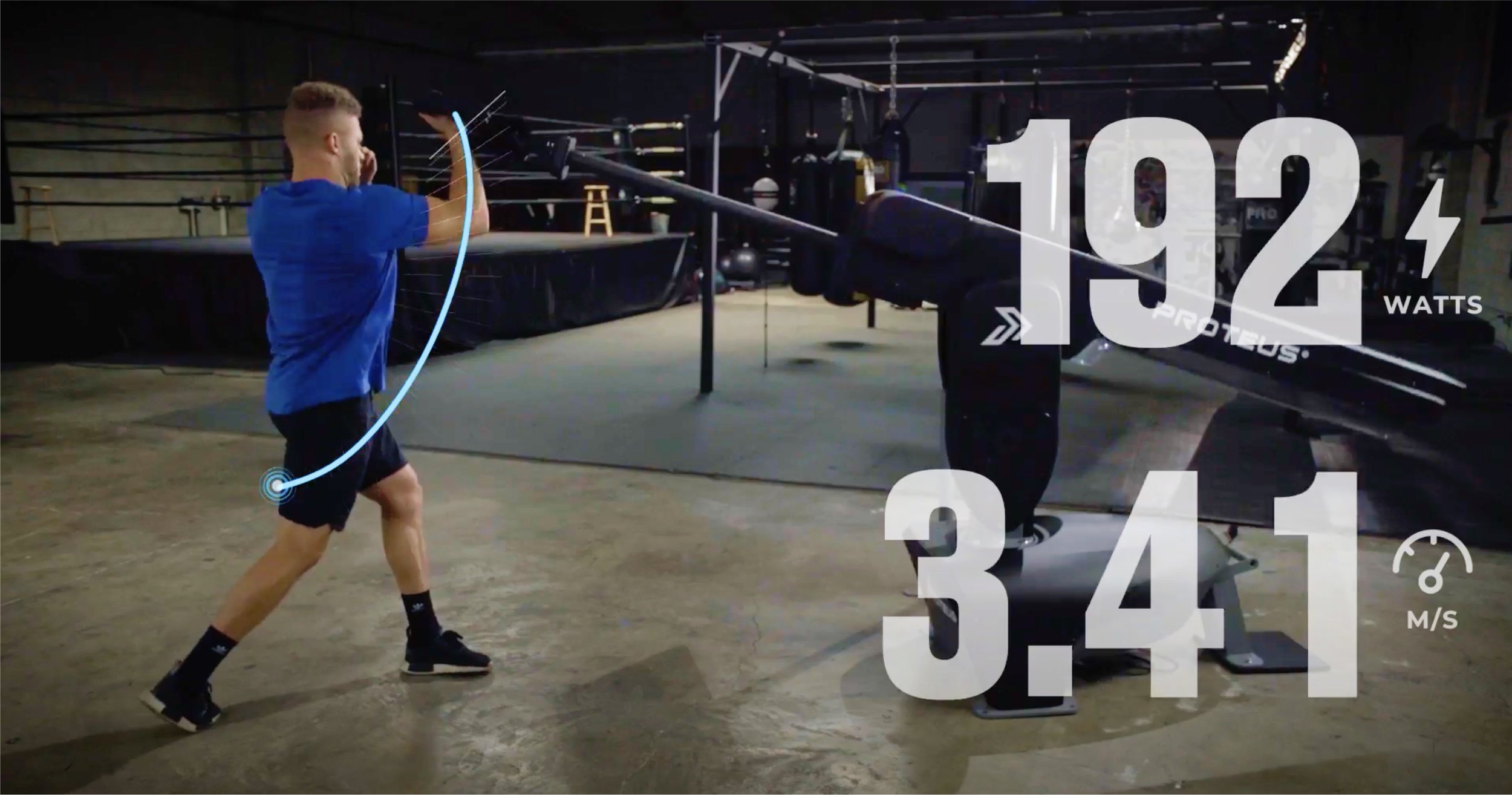
In under 5 minutes, our 3D resistance platform tests your full-body strength, power, and speed across real-world movement patterns. Unlike a bench press or squat max, this measures how your body actually produces and transfers force—exactly the way it does in tennis. You'll see your power output, asymmetries, force-velocity profile, and specific training recommendations.
For tennis players, rotational power is everything. The assessment measures trunk rotation power (forehand, backhand, serve), lateral explosiveness (court coverage), and upper-body force production.
3D Functional Movement Assessment
Priority: 6/6 (Critical)
Shoulder, hip, and ankle mobility are the mechanical foundation of tennis. Asymmetries from repetitive one-sided play are extremely common and directly linked to injury risk.
Using markerless 3D motion capture, this assessment evaluates over 200 data points across your entire body in under 5 minutes. You'll receive a personalized Movement Health Score along with a visual report showing range of motion for every major joint, mobility restrictions, postural imbalances, and compensatory movement patterns.
For tennis players, this assessment is essential. We measure shoulder range of motion (dominant vs. non-dominant), hip rotation, thoracic spine mobility, and ankle function. Years of one-sided play create significant asymmetries that this assessment quantifies.

VO2 Max Testing
Priority: 5/6 (Highly Important)
Matches can last 2–5 hours with sustained high-intensity rallies. Elite tennis requires strong aerobic capacity for late-set performance and recovery between points.
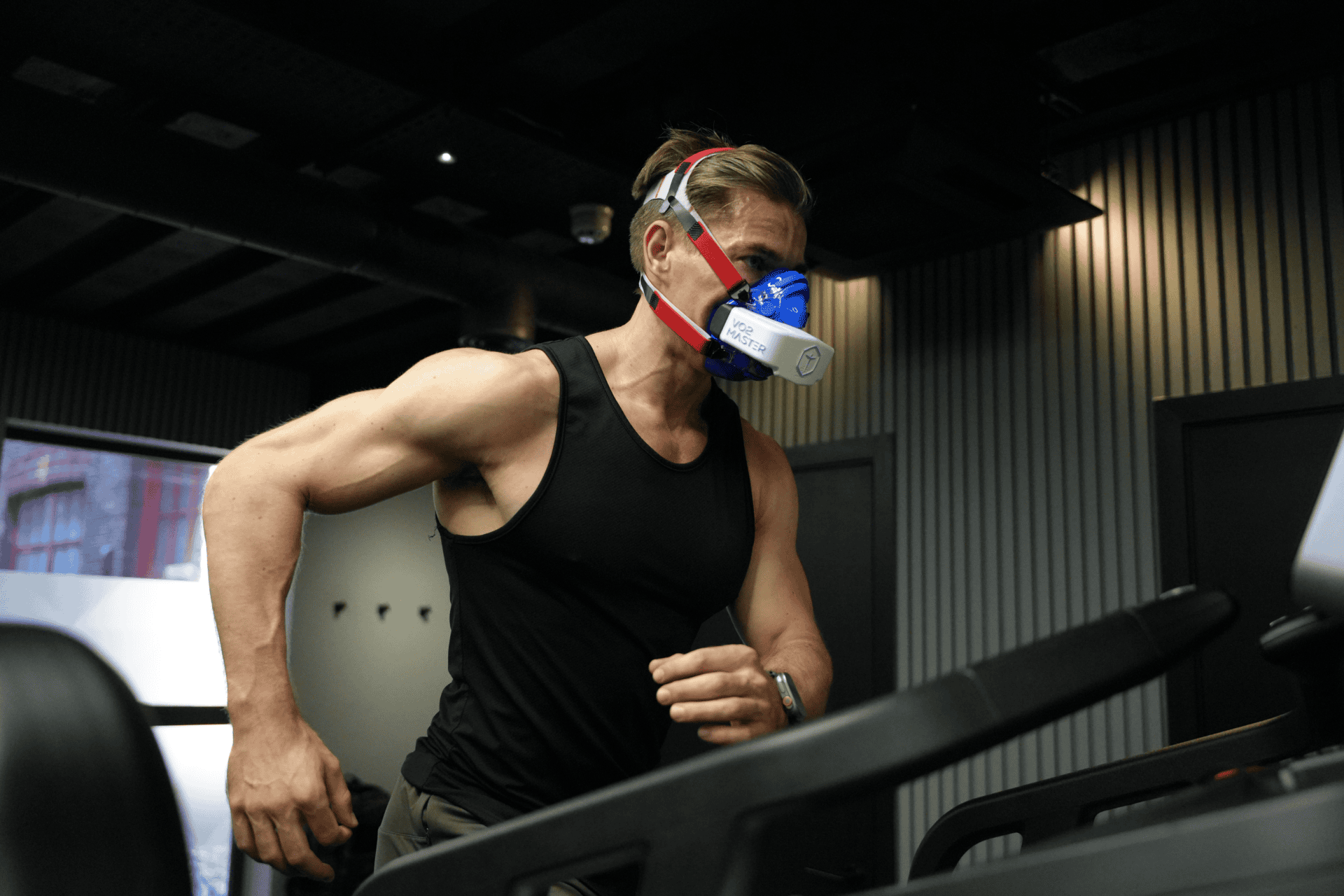
VO2 max measures the maximum amount of oxygen your body can use during intense exercise—the gold standard for cardiovascular fitness. Your test also reveals your personalized heart rate training zones, fat-burning efficiency, and aerobic ceiling, so you know exactly how to train.
VO2 Max Benchmarks
Measured as ML/KG/Min
Female Tennis Athletes
High School: 38-44
D3 College: 40-46
D1 College: 44-52
Professional: 48-58
Male Tennis Athletes
High School: 44-50
D3 College: 48-54
D1 College: 52-60
Professional: 55-65
Serve-and-volley players may function at the lower end; baseline grinders who play long rallies need the higher end.
DEXA Body Composition Scan
Priority: 4/6 (Important)
Lean mass distribution, especially detecting arm-to-arm asymmetries, is valuable for racquet sport athletes who develop dominant-side imbalances.
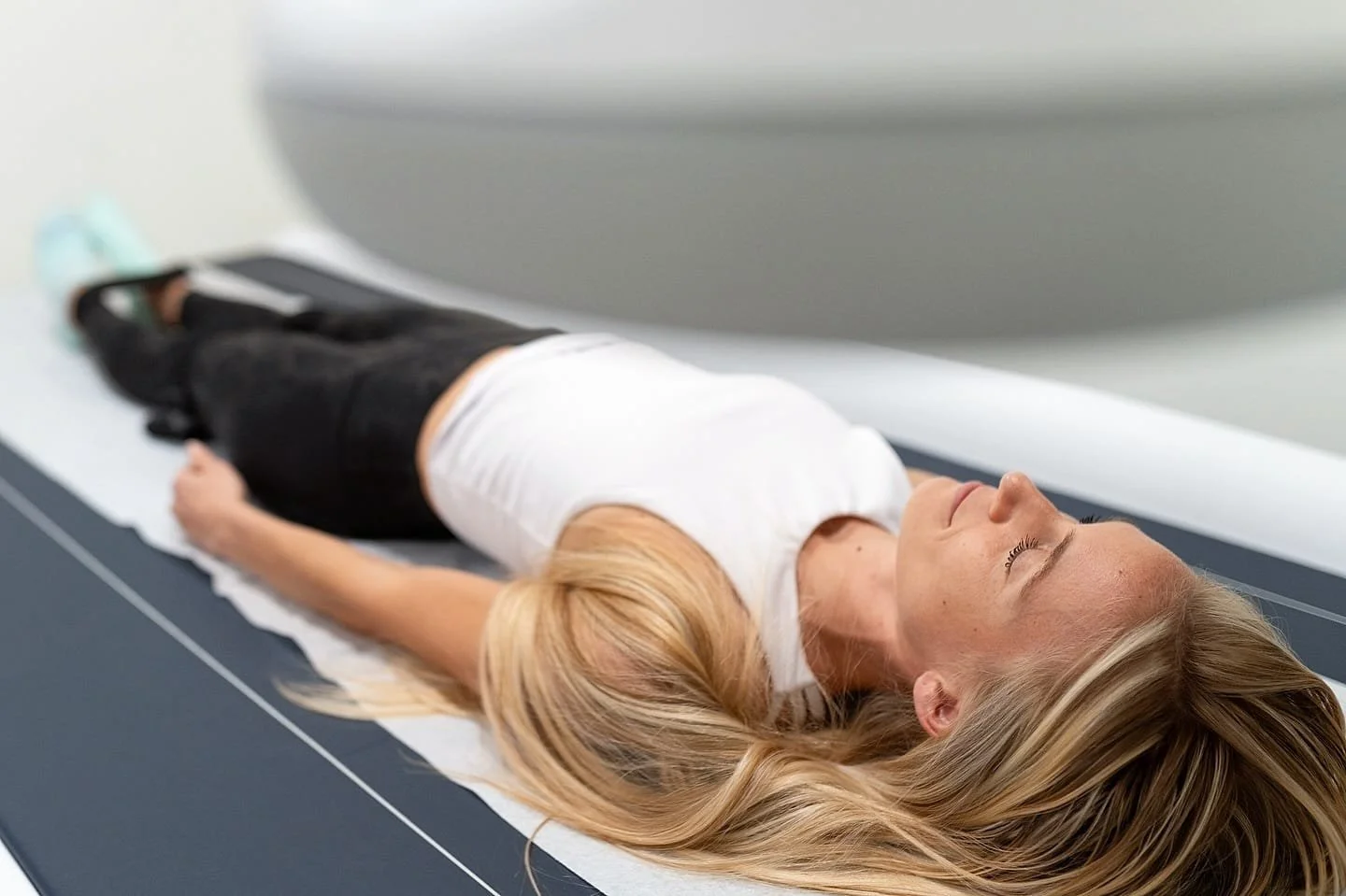
Your scan reveals total body fat percentage, lean muscle mass, bone mineral density, visceral fat, and regional body composition—showing exactly how fat and muscle are distributed across your body. For tennis athletes, this means understanding whether your body composition is helping or hurting your performance.
*Available for athletes ages 16 and older
Target Body Fat Ranges
As Measured on Dexa Machine
Female Tennis Athletes
High School: 18-26%
D3 College: 17-24%
D1 College: 16-22%
Professional: 14-20%
Male Tennis Athletes
High School: 10-16%
D3 College: 10-15%
D1 College: 8-14%
Professional: 7-12%
Note: DEXA-measured body fat percentages typically read 3–5% higher than skinfold or bio-impedance methods. These ranges are calibrated for DEXA.
Resting Metabolic Rate Assessment
Priority: 3/6 (Beneficial)
Helpful for players managing weight during travel-heavy seasons or those needing to optimize fueling for multi-hour matches.
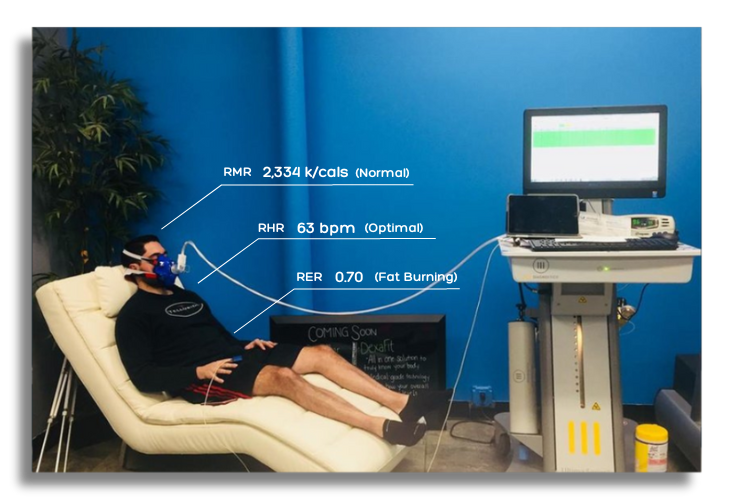
Your RMR test tells you exactly how many calories your body burns at rest—the foundation of any effective nutrition plan. For athletes, this removes the guesswork from fueling: you'll know precisely how much to eat to gain muscle, lose fat, or maintain performance weight.
💡 When this test jumps in priority: If you're an athlete who can't seem to gain muscle despite eating a lot, or you can't lose body fat despite training hard, your metabolism may be the missing piece. An RMR test can reveal whether you're under-eating (slowing your metabolism), over-eating, or misallocating macros. This is especially common in female athletes dealing with Relative Energy Deficiency in Sport (REDs).
Tennis Performance Packages
Every package includes a MetPro metabolic coaching consultation to turn your data into a personalized nutrition and training plan.
🥇 Total Package — All 5 Advanced Tests Including Cognitive: $649
Best for: Elite athletes and scholarship-track competitors who want every measurable advantage.
DEXA 360 *(ages 16+)*
VO2 Max Elite Testing
Resting Metabolic Rate
Strength & Power Assessment
3D Functional Movement Assessment
MetPro Metabolic Coaching Consultation
🥈 Premium Package — Top 5 Physical Tests: $499
Best for: Serious athletes who want a complete physical performance profile.
VO2 Max Testing
DEXA Body Composition Scan *(ages 16+)*
3D Functional Movement Assessment
Resting Metabolic Rate
Strength & Power Assessment
MetPro Metabolic Coaching Consultation
🥉 Base Package — Top 3 Tests: $299
Best for: Athletes looking for the highest-impact data to guide training.
Strength & Power
DEXA Body Composition Scan *(ages 16+)
3D Functional Movement Assessment
MetPro Metabolic Coaching Consultation
FAQs
-
Competitive junior players, high school athletes, college players, and serious adults who want more speed, power, and durability on court. It’s suited for ages 13 and up, from baseliners to all‑court players and doubles specialists.
-
College tennis demands repeat sprinting, rotational power, and resilience over long matches and duals. Showing coaches objective data on your strength & power, movement quality, body composition, VO2 max, and metabolism demonstrates that you can physically handle the demands of college play and are improving your physical tools.
-
Strength & power and movement quality are critical for acceleration, deceleration, and stroke production. Body composition and VO2 max are highly important for energy and recovery during matches and tournaments. Resting metabolic rate is important and becomes highly important for players who feel flat late in matches or struggle with body composition changes.
-
Our cognitive testing partner currently offers validated protocols for a specific set of team sports. Once there is a tennis‑specific module that meets our standards, it can be added to the testing menu. Until then, we focus on the physical and movement factors that most directly influence tennis performance.
-
Typically once before the main competitive season and once during a lighter training block or off‑season. Players making significant technical or physical changes might add a mid‑season test to confirm progress.

Ready to See Where You Stand?
Whether you're a 13-year-old with college dreams or a competitive athlete looking for every edge, our soccer performance testing gives you the data that coaches, recruiters, and scouts value most. Stop training blind. Start training with precision.