
Basketball Performance Testing in Scottsdale, AZ
Data-Driven Training for Basketball Athletes
Basketball demands a rare combination of endurance, explosiveness, and real-time decision-making. Over 40 minutes, players sprint, jump, change direction, and process thousands of decisions—all while managing physical contact. The players who dominate are the ones whose bodies and minds are optimized for these demands.
Our sports performance testing gives athletes (and their parents) a clear picture of exactly where they stand—and exactly what to work on to reach the next level. Whether the goal is earning a high school starting spot, landing a college scholarship, or competing at the professional level, our data replaces guesswork with precision.
This does not replace basketball training; it complements it.
* Ages 13+ | Unless otherwise noted, sports-specific performance testing is available for athletes ages 13 and older. DEXA body composition scans are available for athletes 16 and older. Every package includes a MetPro metabolic coaching consultation to help translate your test results into a personalized nutrition and training plan.

How Each Test Applies to Basketball
Each test below is rated on a 1–6 scale for how critical it is to your sport, with 6 being the most essential.
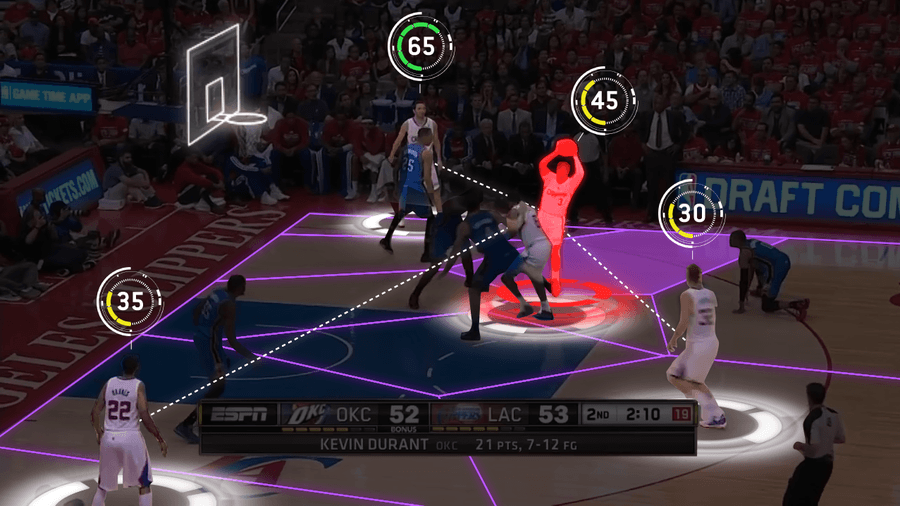
Cognitive Performance Testing
Priority: 6/6 (Critical)
Court vision, anticipation, and rapid decision-making under pressure are what separate elite players. Processing thousands of decisions per game at millisecond speed is a trainable advantage.
Our cognitive performance evaluation is a 40–45 minute assessment that measures nine distinct cognitive functions at millisecond precision—including perception speed, search efficiency, tracking capacity, spatial memory, and improvisation. Unlike a traditional IQ or reaction-time test, this evaluation is sport-specific, measuring the exact cognitive skills used during game-speed decision-making.
For basketball players, the evaluation measures court vision, anticipation, and the ability to process thousands of decisions per game at game speed. These cognitive skills are what coaches mean when they say a player "sees the floor."


Cognitive Skills we Test for Basketball
The evaluation produces a detailed cognitive profile with sport-specific benchmarking and tailored on-field drills designed by top-level coaches to measurably improve your weaknesses.
Perception Speed
How fast do you process the speed of the game?


Spatial Awareness
How good is your awareness of where players are around you?
Decision Complexity
How well do you execute quick read-react decisions?
Distraction Control*
How well do you focus on the court?

Instinctive Learning
How well do you pick up on your opponents' subtle tendencies?

Search Efficiency
How quickly do you scan the court to find your target?

Impulse Control
How well do you control impulsive actions and mistakes?

Improvisation
How well do you improvise your play in the moment?

Tracking Capacity
How well can you scan the court in front of you?

VO2 Max Testing
Priority: 5/6 (Highly Important)
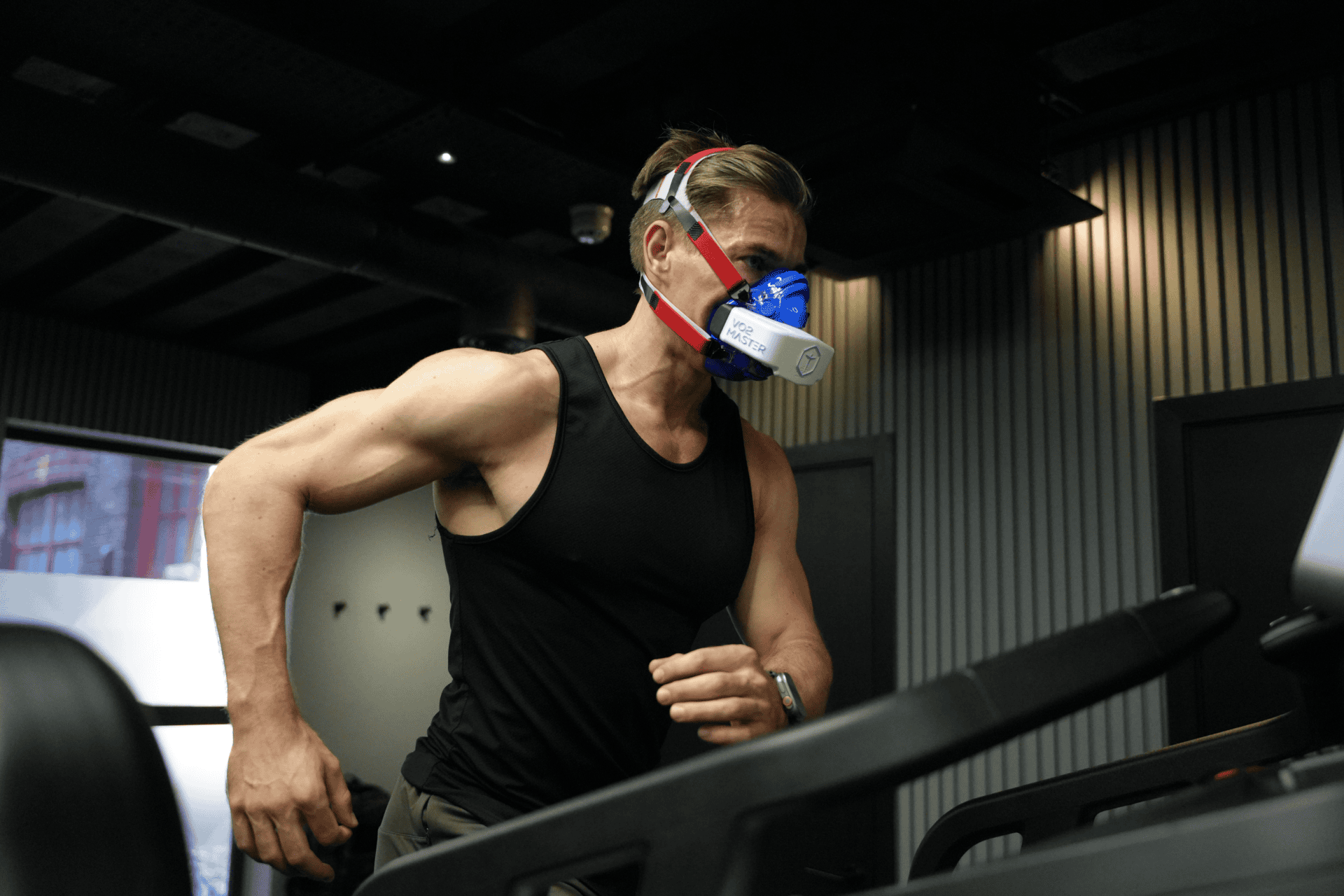
Basketball demands repeated high-intensity sprints with minimal rest. Aerobic capacity fuels recovery between plays and sustains 4th-quarter performance.
VO2 max measures the maximum amount of oxygen your body can use during intense exercise—the gold standard for cardiovascular fitness. Your test also reveals your personalized heart rate training zones, fat-burning efficiency, and aerobic ceiling, so you know exactly how to train.
VO2 Max Benchmarks
Measured as ML/KG/Min
Female Basketball Athletes
High School: 36-42
D3 College: 38-44
D1 College: 42-48
Professional: 44-54
Male Basketball Athletes
High School: 42-48
D3 College: 46-52
D1 College: 50-58
Professional: 52-60
Guards typically need VO2 max values 5–10 ml/kg/min higher than centers due to greater court coverage and transition demands. Wings should target the midpoints.
DEXA Body Composition Scan
Priority: 5/6 (Highly Important)
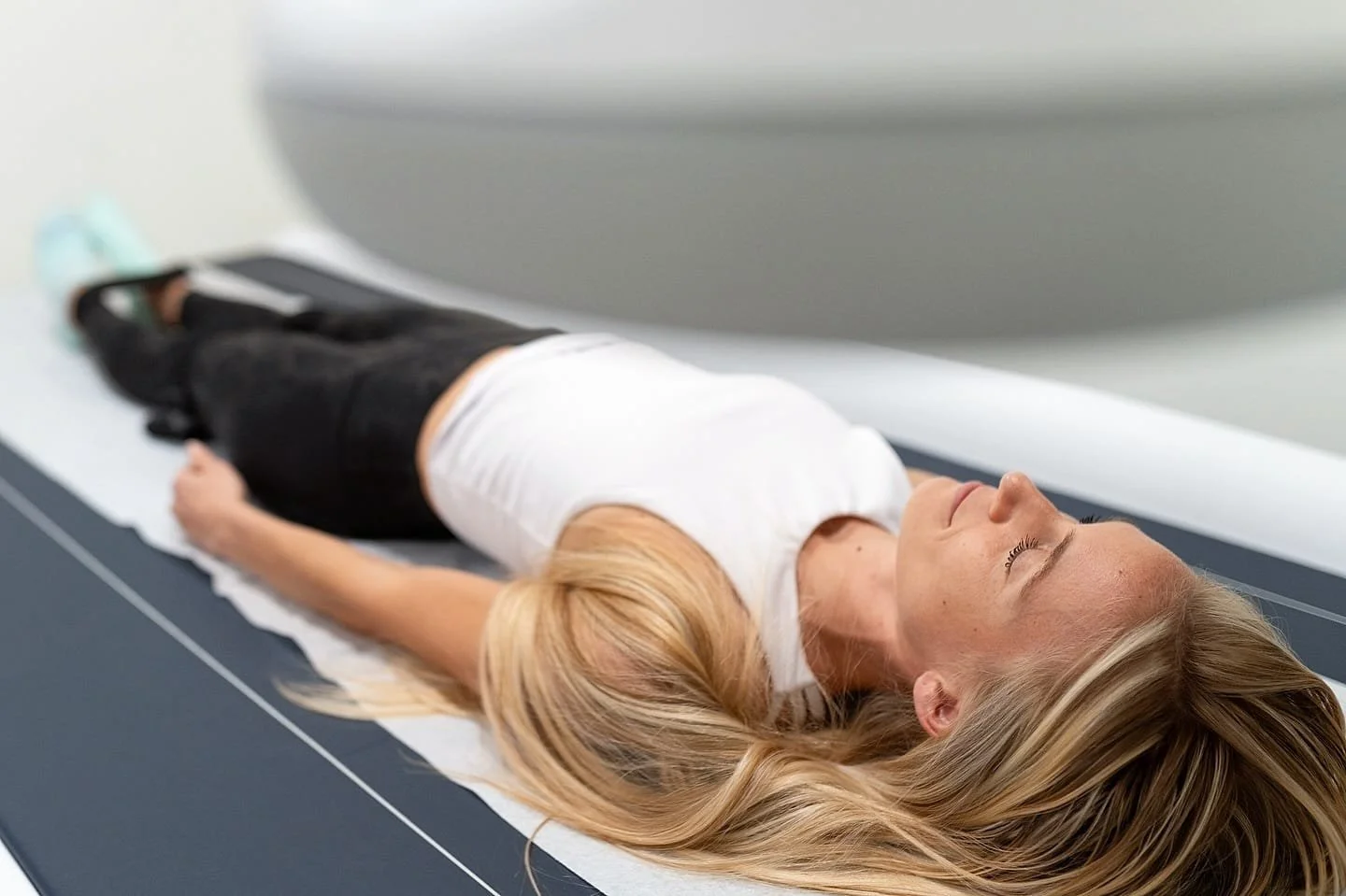
Lean-to-fat ratio directly impacts vertical jump, lateral quickness, and ability to sustain pace over 40 minutes. Lean mass distribution between upper and lower body matters by position.
Your scan reveals total body fat percentage, lean muscle mass, bone mineral density, visceral fat, and regional body composition—showing exactly how fat and muscle are distributed across your body. For basketball athletes, this means understanding whether your body composition is helping or hurting your performance.
*Available for athletes ages 16 and older
Target Body Fat Ranges
As Measured on Dexa Machine
Female Basketball Athletes
High School: 18-26%
D3 College: 18-24%
D1 College: 16-24%
Professional: 14-22%
Male Basketball Athletes
High School: 10-16%
D3 College: 10-14%
D1 College: 8-12%
Professional: 6-11%
Note: DEXA-measured body fat percentages typically read 3–5% higher than skinfold or bio-impedance methods. These ranges are calibrated for DEXA.
3D Functional Movement Assessment
Priority: 5/6 (Highly Important)
Ankle mobility, hip function, and knee tracking are critical for basketball—a sport with one of the highest ACL and ankle sprain rates.
Using markerless 3D motion capture, this assessment evaluates over 200 data points across your entire body in under 5 minutes. You'll receive a personalized Movement Health Score along with a visual report showing range of motion for every major joint, mobility restrictions, postural imbalances, and compensatory movement patterns.
For basketball players, we focus on ankle dorsiflexion, knee valgus patterns, hip mobility, and shoulder function—the areas most associated with ACL injuries, ankle sprains, and shoulder impingement.

Strength & Power Assessment
Priority: 5/6 (Highly Important)
Explosive lower-body power (vertical jump, first-step quickness) and upper-body strength for contact and finishing are essential at every level.
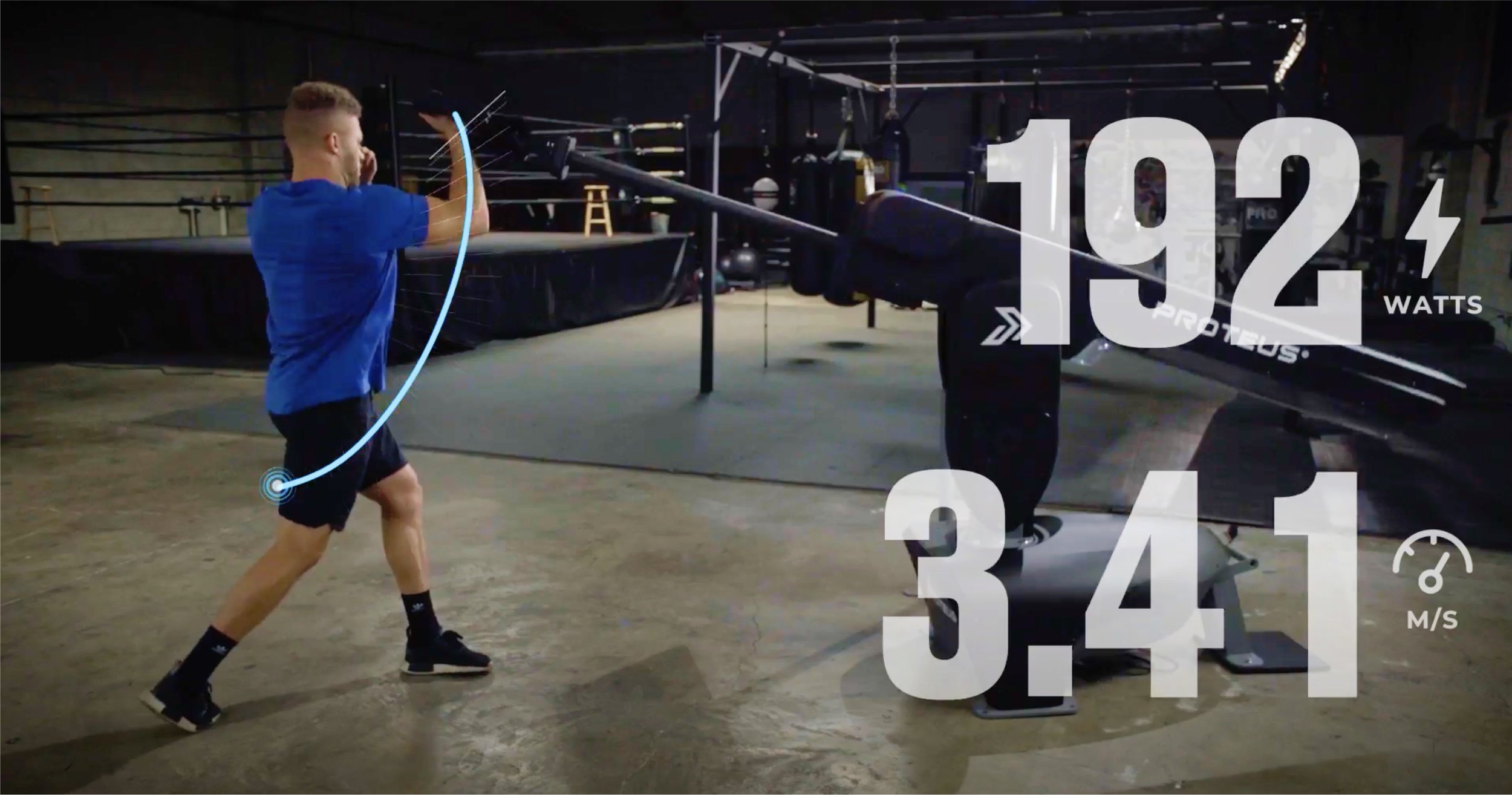
In under 5 minutes, our 3D resistance platform tests your full-body strength, power, and speed across real-world movement patterns. Unlike a bench press or squat max, this measures how your body actually produces and transfers force—exactly the way it does in basketball. You'll see your power output, asymmetries, force-velocity profile, and specific training recommendations.
For basketball players, the assessment reveals vertical jump power, lateral explosiveness, upper-body contact strength, and rotational core power—all directly tied to on-court performance.
Resting Metabolic Rate Assessment
Priority: 3/6 (Beneficial)
Helpful for tall athletes who struggle to manage body composition, or guards trying to stay lean during a season with limited conditioning time.
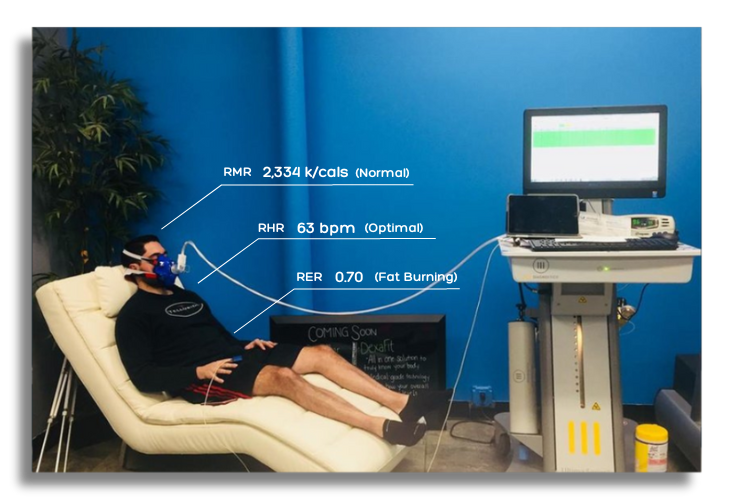
Your RMR test tells you exactly how many calories your body burns at rest—the foundation of any effective nutrition plan. For athletes, this removes the guesswork from fueling: you'll know precisely how much to eat to gain muscle, lose fat, or maintain performance weight.
💡 When this test jumps in priority: If you're an athlete who can't seem to gain muscle despite eating a lot, or you can't lose body fat despite training hard, your metabolism may be the missing piece. An RMR test can reveal whether you're under-eating (slowing your metabolism), over-eating, or misallocating macros. This is especially common in female athletes dealing with Relative Energy Deficiency in Sport (REDs).
Basketball Performance Packages
Every package includes a MetPro metabolic coaching consultation to turn your data into a personalized nutrition and training plan.
🥇 Total Package — All 6 Tests Including Cognitive: $999
Best for: Elite athletes and scholarship-track competitors who want every measurable advantage.
DEXA 360 *(ages 16+)*
VO2 Max Elite Testing
Resting Metabolic Rate
Strength & Power Assessment
3D Functional Movement Assessment
Cognitive Performance Testing
MetPro Metabolic Coaching Consultation
🥈 Premium Package — Top 5 Physical Tests: $499
Best for: Serious athletes who want a complete physical performance profile.
VO2 Max Testing
DEXA Body Composition Scan *(ages 16+)*
3D Functional Movement Assessment
Resting Metabolic Rate
Strength & Power Assessment
MetPro Metabolic Coaching Consultation
🥉 Base Package — Top 3 Tests: $299
Best for: Athletes looking for the highest-impact data to guide training.
VO2 Max Testing
DEXA Body Composition Scan *(ages 16+)
3D Functional Movement Assessment
MetPro Metabolic Coaching Consultation
FAQs
-
Guards, wings, and posts from age 13 and up who want to jump higher, move better, and play harder for longer—whether that’s for club, high school, college, or pro aspirations. It’s especially useful for athletes targeting exposure events, combines, or scholarship opportunities.
-
College coaches look for speed, endurance, decision‑making, and resilience across a full game. Showing them objective metrics on your VO2 max, movement quality, strength & power, body composition, and cognitive skills reinforces what they see on film and communicates that you’re serious about high‑level development.
-
Movement quality and strength & power are critical for jumping, landing, and cutting safely. Cognitive testing, body composition, and VO2 max are highly important, while resting metabolic rate is beneficial for year‑round energy management and becomes highly important when athletes hit a wall with body recomposition or feel chronically fatigued.
-
Yes. The movement assessment highlights issues with ankle dorsiflexion, knee tracking, hip stability, and landing mechanics—key factors in knee and ankle injuries. Strength & power data also shows asymmetries between legs so you can address imbalances before they become problems.
-
Twice per year works well for most: once in the off‑season to guide training, and once before the season or a major tournament schedule. Elite athletes may add a mid‑season check to monitor how their body is holding up.

Ready to See Where You Stand?
Whether you're a 13-year-old with college dreams or a competitive athlete looking for every edge, our soccer performance testing gives you the data that coaches, recruiters, and scouts value most. Stop training blind. Start training with precision.