
Ice Hockey Performance Testing in Scottsdale, AZ
Data-Driven Training for Ice Hockey Athletes
Ice hockey is one of the most physically demanding sports in the world. Players execute 45–90 second shifts at near-maximal intensity, generating explosive skating power, delivering and absorbing body checks, and making split-second decisions at speeds exceeding 25 mph. The margins between making a roster and being cut are measurable.
Our sports performance testing gives athletes (and their parents) a clear picture of exactly where they stand—and exactly what to work on to reach the next level. Whether the goal is earning a high school starting spot, landing a college scholarship, or competing at the professional level, our data replaces guesswork with precision.
This does not replace soccer training; it complements it.
* Ages 13+ | Unless otherwise noted, sports-specific performance testing is available for athletes ages 13 and older. DEXA body composition scans are available for athletes 16 and older. Every package includes a MetPro metabolic coaching consultation to help translate your test results into a personalized nutrition and training plan.
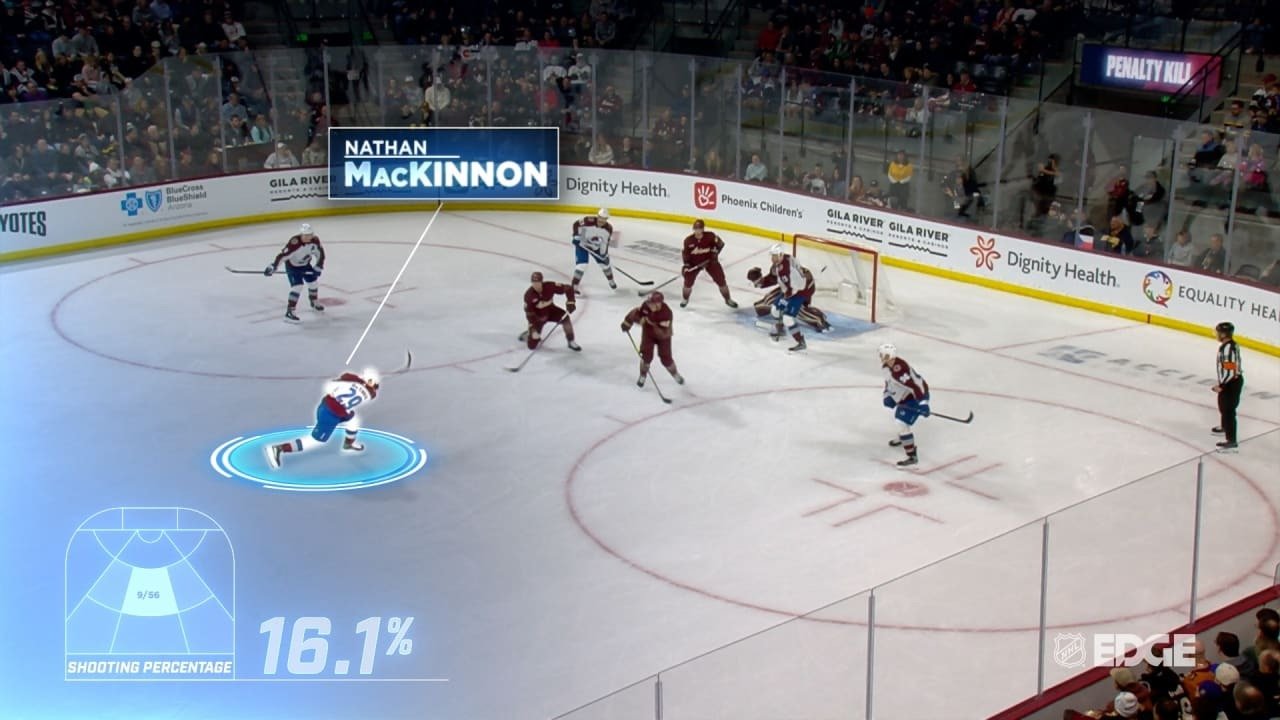

How Each Test Applies to Ice Hockey
Each test below is rated on a 1–6 scale for how critical it is to your sport, with 6 being the most essential.
Strength & Power Assessment
Priority: 6/6 (Critical)
Skating power, shot power, and body-checking force all depend on multi-planar strength and explosive rotational power—exactly what 3D resistance testing measures.
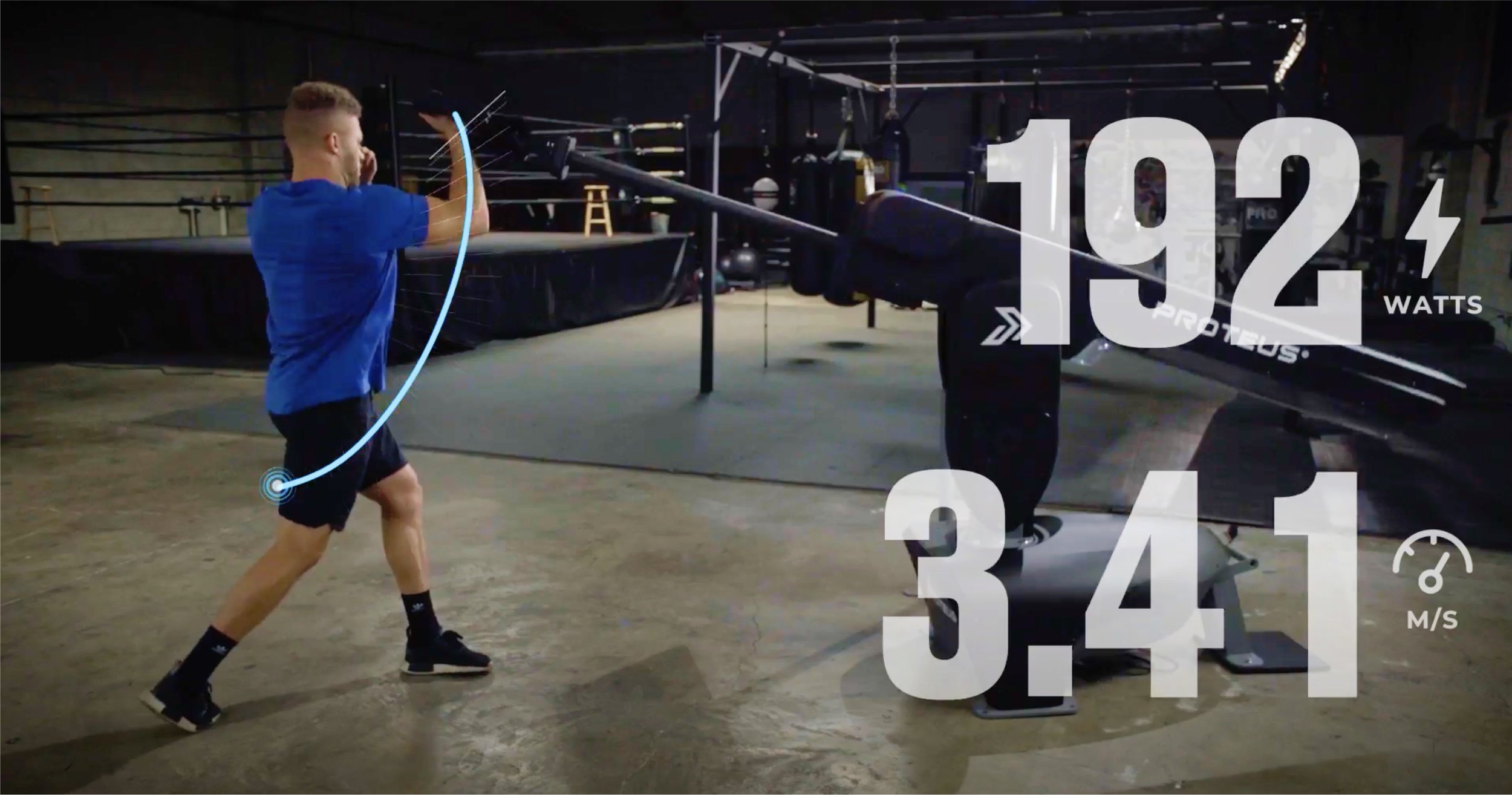
In under 5 minutes, our 3D resistance platform tests your full-body strength, power, and speed across real-world movement patterns. Unlike a bench press or squat max, this measures how your body actually produces and transfers force—exactly the way it does in ice hockey. You'll see your power output, asymmetries, force-velocity profile, and specific training recommendations.
For hockey players, the assessment measures rotational trunk power (slap shot, wrist shot), lateral power (skating stride), and upper-body strength (checking, puck protection)—the exact demands of the sport.
VO2 Max Testing
Priority: 5/6 (Highly Important)
Repeated 45–90 second shifts at near-maximal intensity demand elite aerobic recovery capacity. VO2 max is a top predictor of on-ice performance.
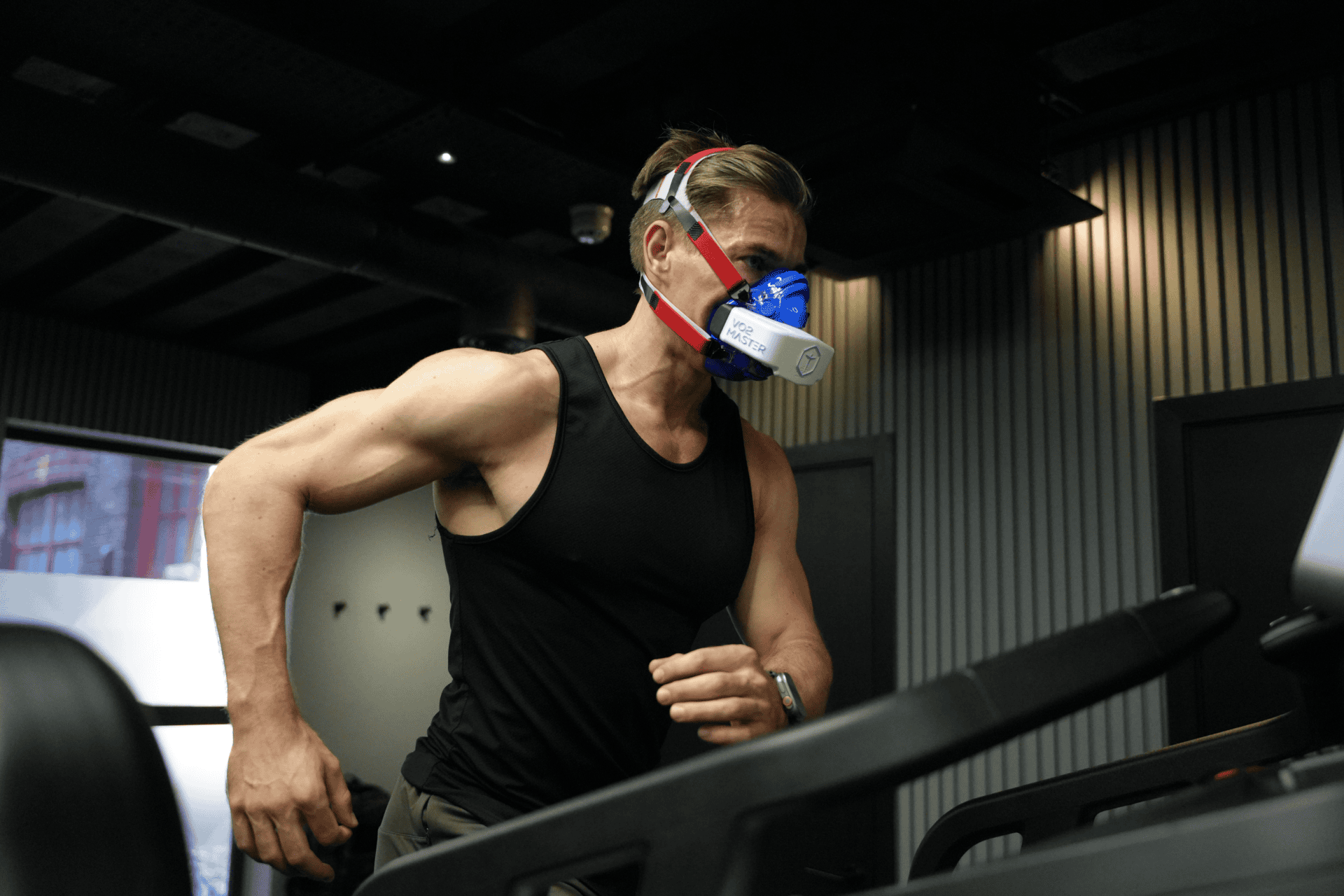
VO2 max measures the maximum amount of oxygen your body can use during intense exercise—the gold standard for cardiovascular fitness. Your test also reveals your personalized heart rate training zones, fat-burning efficiency, and aerobic ceiling, so you know exactly how to train.
VO2 Max Benchmarks
Measured as ML/KG/Min
Female Ice Hockey Athletes
High School: 38-44
D3 College: 40-48
D1 College: 44-54
Professional: 48-58
Male Ice Hockey Athletes
High School: 45-52
D3 College: 50-56
D1 College: 54-62
Professional: 56-65
Forwards and defensemen need similar VO2 max levels. Goalies can be 8–12 ml/kg/min lower but still benefit from strong aerobic conditioning.
Cognitive Performance Testing
Priority: 5/6 (Highly Important)
Field vision, spatial awareness, and split-second decision-making separate good players from great ones. Cognitive speed is especially critical for midfielders and defenders.
Our cognitive performance evaluation is a 40–45 minute assessment that measures nine distinct cognitive functions at millisecond precision—including perception speed, search efficiency, tracking capacity, spatial memory, and improvisation. Unlike a traditional IQ or reaction-time test, this evaluation is sport-specific, measuring the exact cognitive skills used during game-speed decision-making.
For soccer players, the evaluation assesses field vision, read-and-react speed, and execution control—the cognitive skills that determine whether you're always in the right position or always a step behind.
The evaluation produces a detailed cognitive profile with sport-specific benchmarking and tailored on-field drills designed by top-level coaches to measurably improve your weaknesses.


Cognitive Skills we Test for Ice Hockey
The evaluation produces a detailed cognitive profile with sport-specific benchmarking and tailored on-field drills designed by top-level coaches to measurably improve your weaknesses.
Perception Speed
How fast do you process the speed of the game?


Spatial Awareness
How well do you see where teammates or defenders are?
Decision Complexity
How well do you execute quick read-react decisions?
Distraction Control
How well do you stay locked in?

Instinctive Learning
How well do you pick up on your opponents' subtle tendencies?

Search Efficiency
How quickly can you scan the ice?

Impulse Control
How well do you control impulsive reactions?

Improvisation
How quickly can you switch gears in the moment?

Tracking Capacity
How well do you see the ice?

3D Functional Movement Assessment
Priority: 5/6 (Highly Important)
Movement screening identifies hip, ankle, and knee asymmetries—the primary injury sites in soccer players.
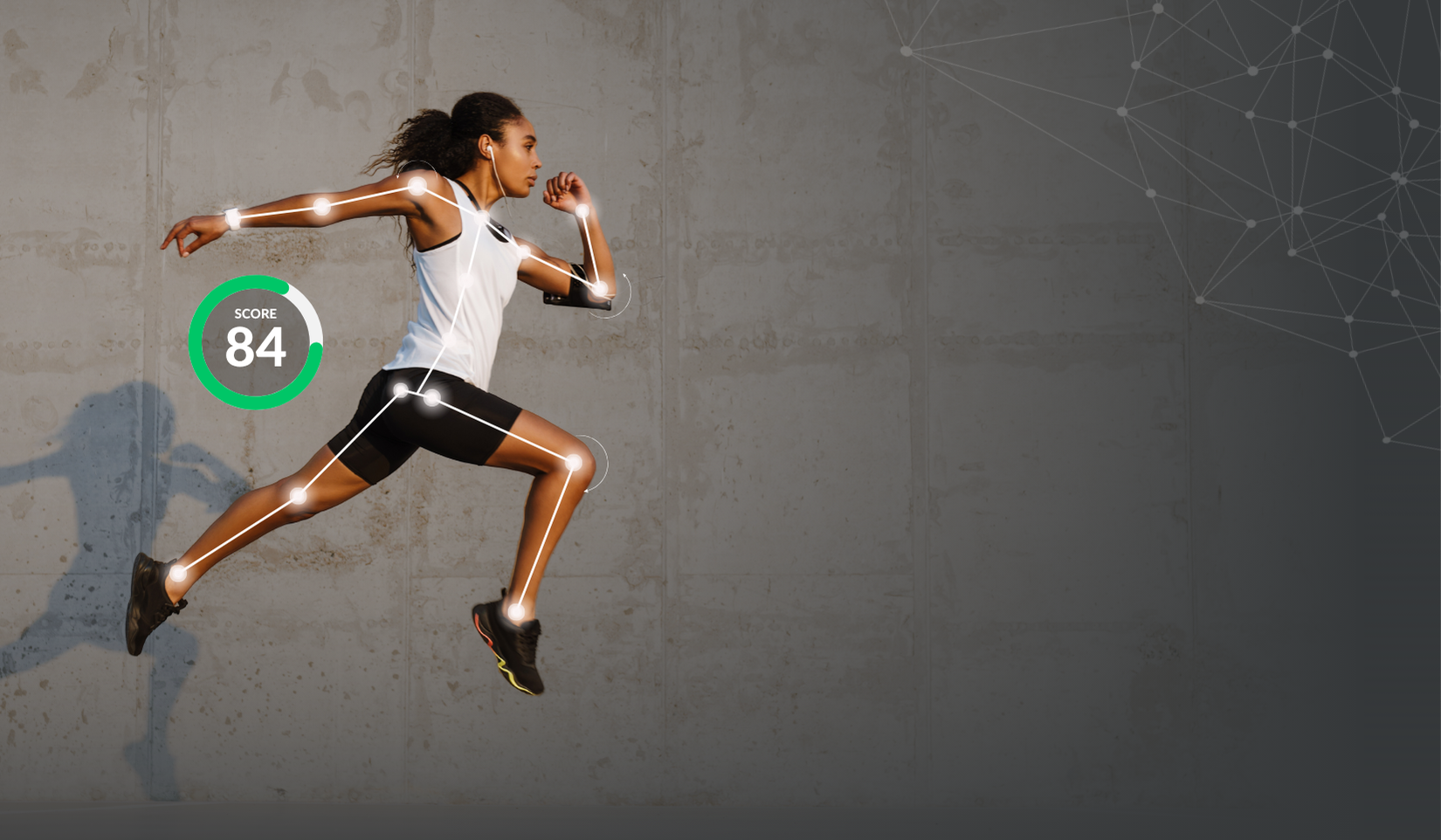
Using markerless 3D motion capture, this assessment evaluates over 200 data points across your entire body in under 5 minutes. You'll receive a personalized Movement Health Score along with a visual report showing range of motion for every major joint, mobility restrictions, postural imbalances, and compensatory movement patterns.
For soccer players, we're looking closely at hip flexor mobility, ankle dorsiflexion, hamstring flexibility, and knee tracking—the areas most associated with ACL tears, hamstring strains, and groin injuries.
DEXA Body Composition Scan
Priority: 4/6 (Important)
Body composition optimization helps with speed-to-weight ratio. Especially important for forwards and midfielders managing weight for agility.
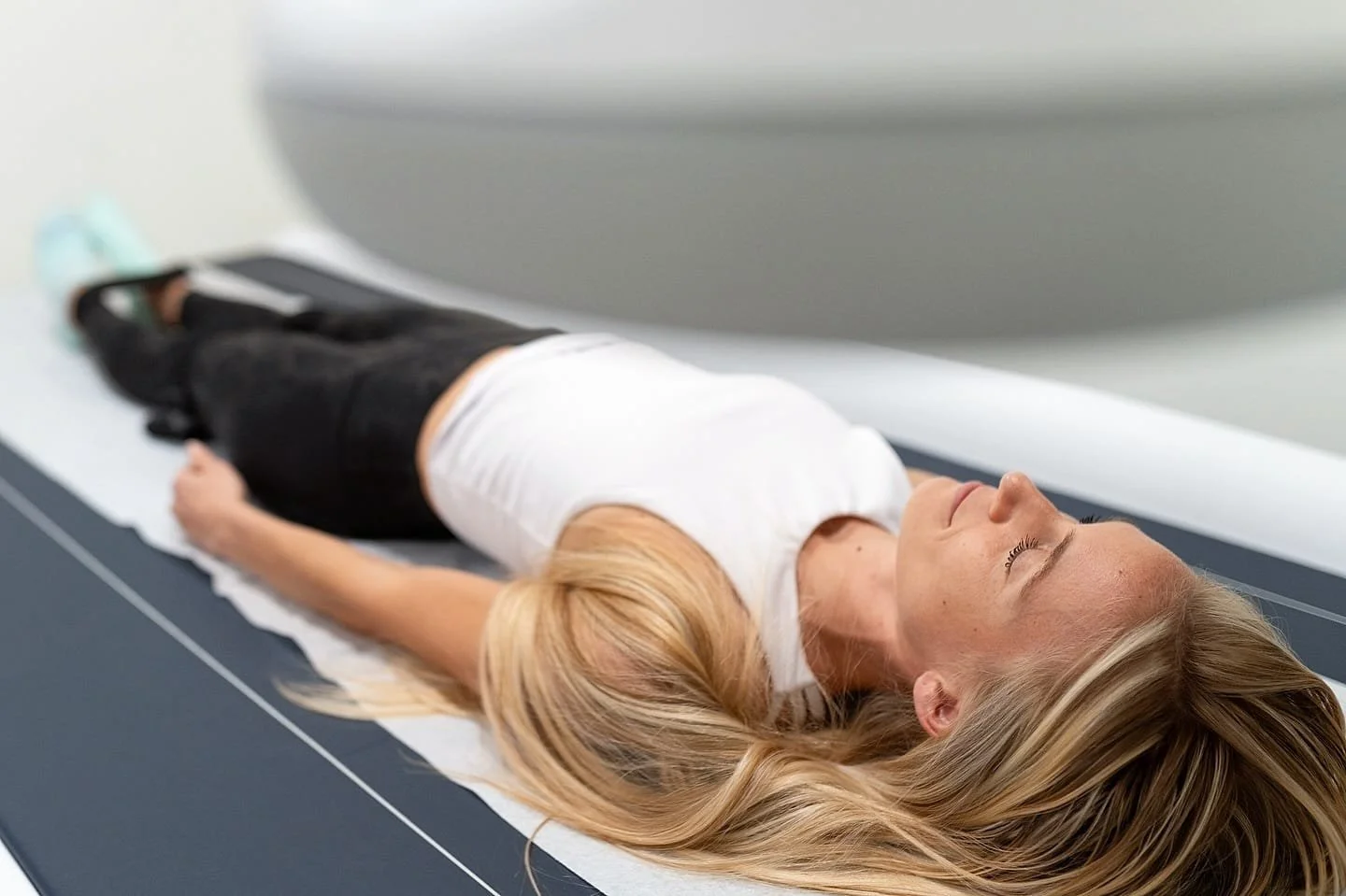
Your scan reveals total body fat percentage, lean muscle mass, bone mineral density, visceral fat, and regional body composition—showing exactly how fat and muscle are distributed across your body. For soccer athletes, this means understanding whether your body composition is helping or hurting your performance.
*Available for athletes ages 16 and older
Target Body Fat Ranges
As Measured on Dexa Machine
Female Ice Hockey Athletes
High School: 20-28%
D3 College: 18-26%
D1 College: 17-25%
Professional: 15-22%
Male Ice Hockey Athletes
High School: 12-18%
D3 College: 11-16%
D1 College: 10-15%
Professional: 8-14%
Note: DEXA-measured body fat percentages typically read 3–5% higher than skinfold or bio-impedance methods. These ranges are calibrated for DEXA.
Resting Metabolic Rate Assessment
Priority: 3/6 (Beneficial)
Helpful for players managing body composition during a long season or those trying to add lean mass without excess fat.
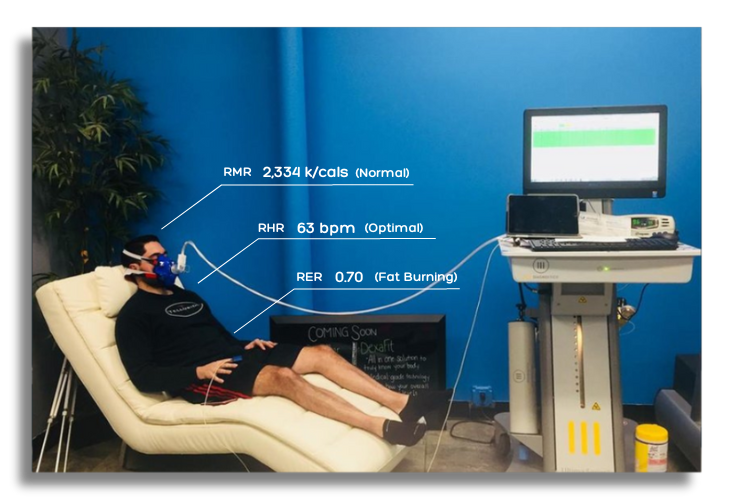
Your RMR test tells you exactly how many calories your body burns at rest—the foundation of any effective nutrition plan. For athletes, this removes the guesswork from fueling: you'll know precisely how much to eat to gain muscle, lose fat, or maintain performance weight.
💡 When this test jumps in priority: If you're an athlete who can't seem to gain muscle despite eating a lot, or you can't lose body fat despite training hard, your metabolism may be the missing piece. An RMR test can reveal whether you're under-eating (slowing your metabolism), over-eating, or misallocating macros. This is especially common in female athletes dealing with Relative Energy Deficiency in Sport (REDs).
Ice Hockey Performance Packages
Every package includes a MetPro metabolic coaching consultation to turn your data into a personalized nutrition and training plan.
🥇 Total Package — All 6 Tests Including Cognitive: $999
Best for: Elite athletes and scholarship-track competitors who want every measurable advantage.
DEXA 360 *(ages 16+)*
VO2 Max Elite Testing
Resting Metabolic Rate
Strength & Power Assessment
3D Functional Movement Assessment
Cognitive Performance Testing
MetPro Metabolic Coaching Consultation
🥈 Premium Package — Top 5 Physical Tests: $499
Best for: Serious athletes who want a complete physical performance profile.
VO2 Max Testing
DEXA Body Composition Scan *(ages 16+)*
3D Functional Movement Assessment
Resting Metabolic Rate
Strength & Power Assessment
MetPro Metabolic Coaching Consultation
🥉 Base Package — Top 3 Tests: $299
Best for: Athletes looking for the highest-impact data to guide training.
VO2 Max Testing
DEXA Body Composition Scan *(ages 16+)
Strength & Power Assessment
MetPro Metabolic Coaching Consultation
FAQs
-
Male and female forwards, defensemen, and goalies ages 13 and up who are serious about performance—club, high school, juniors, college, and pro. Different positions will focus on slightly different metrics, but all benefit from better conditioning, body composition, strength, movement, and decision‑making data.
-
Objective measures of power, body composition, aerobic capacity, and cognitive speed align closely with shift quality, recovery between shifts, and game impact. For juniors and college recruiting, these numbers complement your on‑ice stats and video to show coaches your readiness for higher levels of play.
-
Forwards and defensemen benefit most from critical tests like strength & power and body composition, with VO2 max and movement quality highly important. Goalies, in particular, benefit from movement quality and cognitive testing as critical elements, while VO2 max and RMR are important for managing workload and energy.
-
Yes. The testing, targets, and recommendations are calibrated for both male and female athletes. Female‑specific benchmarks for body composition and VO2 max are included so female players can compare themselves to appropriate standards rather than relying on male data.
-
Two to three times per year is ideal: early off‑season, late off‑season, and optionally mid‑season. This ensures your training is building the exact capacities you need and that your body is adapting well to in‑season demands.

Ready to See Where You Stand?
Whether you're a 13-year-old with college dreams or a competitive athlete looking for every edge, our soccer performance testing gives you the data that coaches, recruiters, and scouts value most. Stop training blind. Start training with precision.